

If the outside of your knee starts to ache around mile three and gets sharp enough by mile five that you're walking home, you're probably dealing with IT band syndrome. It's one of the most common running injuries I see in the clinic, and the good news is that most runners get back to pain-free miles without giving up running for months.
It's frustrating when the pain shows up at the same point on every run and disappears an hour after you stop. That pattern is a big clue, and it tells us a lot about what's going on.
What the IT band is
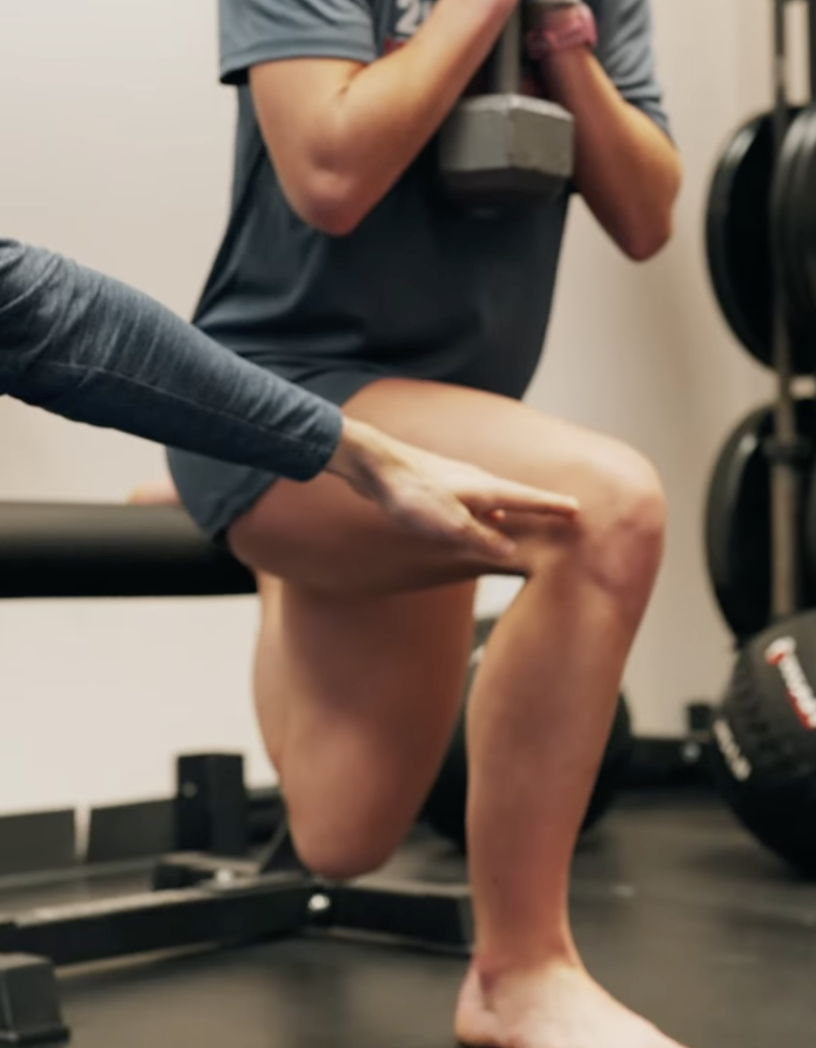
The iliotibial band is a thick band of connective tissue that runs from your hip down the outside of your thigh and attaches just below the knee. It isn't a muscle, so you can't stretch it longer in any way that matters. It's tight because it's built to be tight. It helps stabilize your hip and knee every time your foot hits the ground.
Pain usually shows up where the band crosses the outside of the knee. Some runners feel it higher up near the hip instead.
Why it starts hurting
IT band pain is almost always a load problem. The tissue is being asked to handle more than it's ready for, and it lets you know. In my experience, it usually comes from one of three places:
Training jumped too fast. A new mileage block, a hilly route you don't usually run, or adding a long run right after a race.
The hip isn't controlling the leg. When the glute muscles on the side of your hip can't keep the pelvis level, the knee drifts inward and the IT band takes extra strain on every step.
Your stride puts the foot too far out in front. Overstriding and running with a narrow, crossover step both increase the load at the outside of the knee.
Most runners have a mix of all three. That's why foam rolling alone rarely fixes it. It can feel good for a few minutes, but it doesn't change the reason the tissue is overloaded.
What to do in the first two weeks
You don't have to stop running completely. You have to stop running into the pain.
Run up to the point of pain, not through it. If it starts at mile three, keep your runs under that for now and build back slowly.
Skip steep downhills for a bit. Downhill running is one of the biggest IT band triggers because the knee bends at the angle where the band is most irritated.
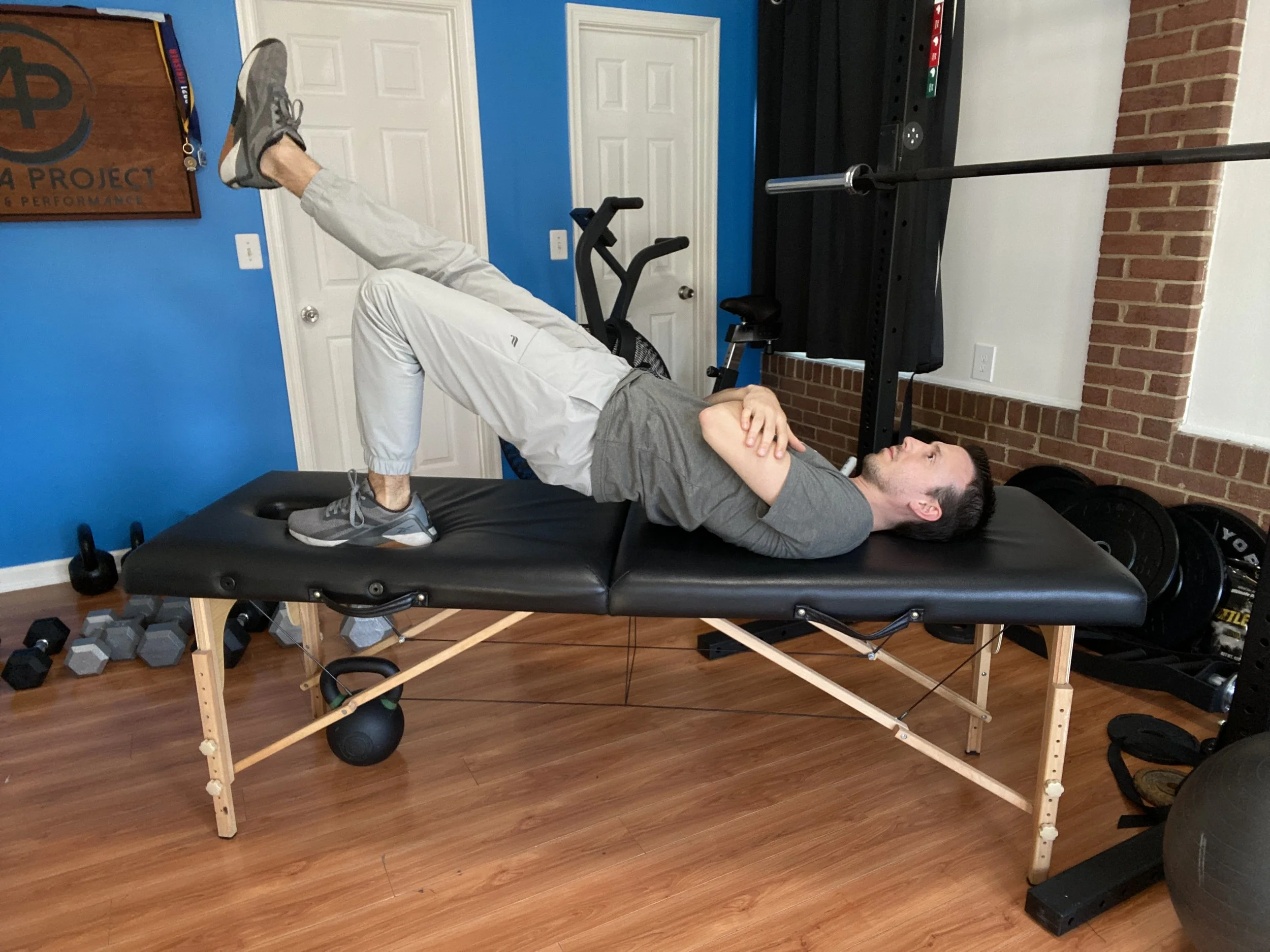
Start strengthening the side of your hip. Side-lying leg raises, side planks and banded lateral walks are a good place to start. Two or three sets, a few days a week.
Try a small cadence bump. Taking slightly quicker, shorter steps (about 5 percent more steps per minute) lowers the load on the knee for a lot of runners.
If the pain is getting better week to week, keep going. If it's the same or worse after two weeks, or if it hurts to walk or go down stairs, that's when you should get it looked at.
How we treat IT band pain at Alpha Project Phyzio
Every runner who comes in with IT band pain gets a full evaluation and a look at how they run. We film you on the treadmill and slow it down frame by frame during our running gait analysis, because the problem is often something you can't feel while running, like your knee crossing the midline or your foot landing well in front of your hips.
From there, your plan usually includes:
Hip and glute strength that matches what running demands, progressing from basic exercises to single-leg and plyometric work.
Running form changes you can apply on your next run, like cadence or step width.
A return-to-run plan with real numbers, so you know exactly how many miles to run this week and next instead of guessing.
You get one-on-one time with a physical therapist who runs, at our Gaithersburg or Frederick clinic. We don't hand you off or split your hour with three other patients. Learn more about our physical therapy for runners, or dig deeper into how we think about running injuries in our book, Built to Run.
When IT band pain isn't IT band pain
Outside knee pain can also come from the lateral meniscus, the hip, or the low back. A sharp, locking or swelling knee, pain that started with a twist or fall, or pain that wakes you up at night needs a proper exam instead of a home program. That's a big part of why an evaluation matters.
Get back to running without guessing
If IT band pain keeps cutting your runs short, our Runner's Analysis is the fastest way to find out why. You get a one-on-one session with a running PT, a video gait analysis, and a clear plan to get back to the miles you want to run, in Gaithersburg or Frederick.
FAQ
Should I keep running with IT band pain?
Usually yes, as long as you stay below the point where the pain starts. Running through sharp pain tends to make it last longer.
Does foam rolling help IT band syndrome?
It can ease symptoms for a short time, but it won't fix the cause. Hip strength, training load and running form changes are what get rid of it.
How long does IT band syndrome take to heal?
Most runners we treat feel a clear change in a few weeks once the cause is addressed. Longer-standing cases can take a couple of months.
Do I need a referral to see a physical therapist in Maryland?
No. In Maryland you can see a physical therapist directly without a doctor's referral.
Where are you located?
We treat runners at our Gaithersburg and Frederick, MD clinics.
