
Diastasis Recti After Pregnancy: What It Is and How Physical Therapy Helps
Diastasis recti is a condition where the connective tissue between the left and right sides of your abdominal muscles stretches and thins—often as a result of pregnancy. During pregnancy, your growing belly puts pressure on the linea alba, the band of tissue that holds your rectus abdominis muscles together (those “six-pack” muscles). As it stretches, a visible gap or bulge may develop along the midline of your abdomen.
READ: Are Flat Feet More Likely to Cause Pronation?
This separation is very common in the postpartum period, but it’s not always visible. Some people notice a doming or coning of the belly when sitting up, while others feel weakness or instability in their core. Regardless of how it presents, diastasis recti is more than cosmetic—it can significantly affect how your body functions.
Why It Happens and Who’s at Risk
Diastasis recti is a normal response to the demands of pregnancy. The abdominal wall must stretch to accommodate the growing uterus, and for many people, that tissue doesn’t immediately return to its original tension after birth.
Several factors can increase the likelihood or severity of diastasis recti:
Multiple pregnancies, especially close together
Carrying twins or a larger baby
Poor core engagement before or during pregnancy
C-section or other abdominal surgeries
While it’s common, diastasis recti shouldn’t be ignored. Without proper recovery, it can lead to lingering issues that make everyday tasks feel harder than they should.
How Diastasis Recti Affects Daily Life
Because the core plays a central role in almost every movement, a weakened abdominal wall can affect more than your workouts. Many people with diastasis recti report:
Low back pain due to poor core support
Pelvic floor dysfunction, including incontinence or heaviness
Postural changes and increased fatigue
Difficulty lifting, twisting, or returning to exercise
You might feel like your body isn’t moving the way it used to—or that your “center” feels unstable. This can be frustrating, especially when you’re eager to return to your previous activity level. That’s where pelvic floor physical therapy can make a meaningful difference.
How Pelvic Floor Physical Therapy Can Help
At Alpha Project in Gaithersburg, our pelvic floor physical therapy approach helps you reconnect with your deep core and rebuild strength safely—without risking further separation or strain.
READ: 5K Strength Training Workouts
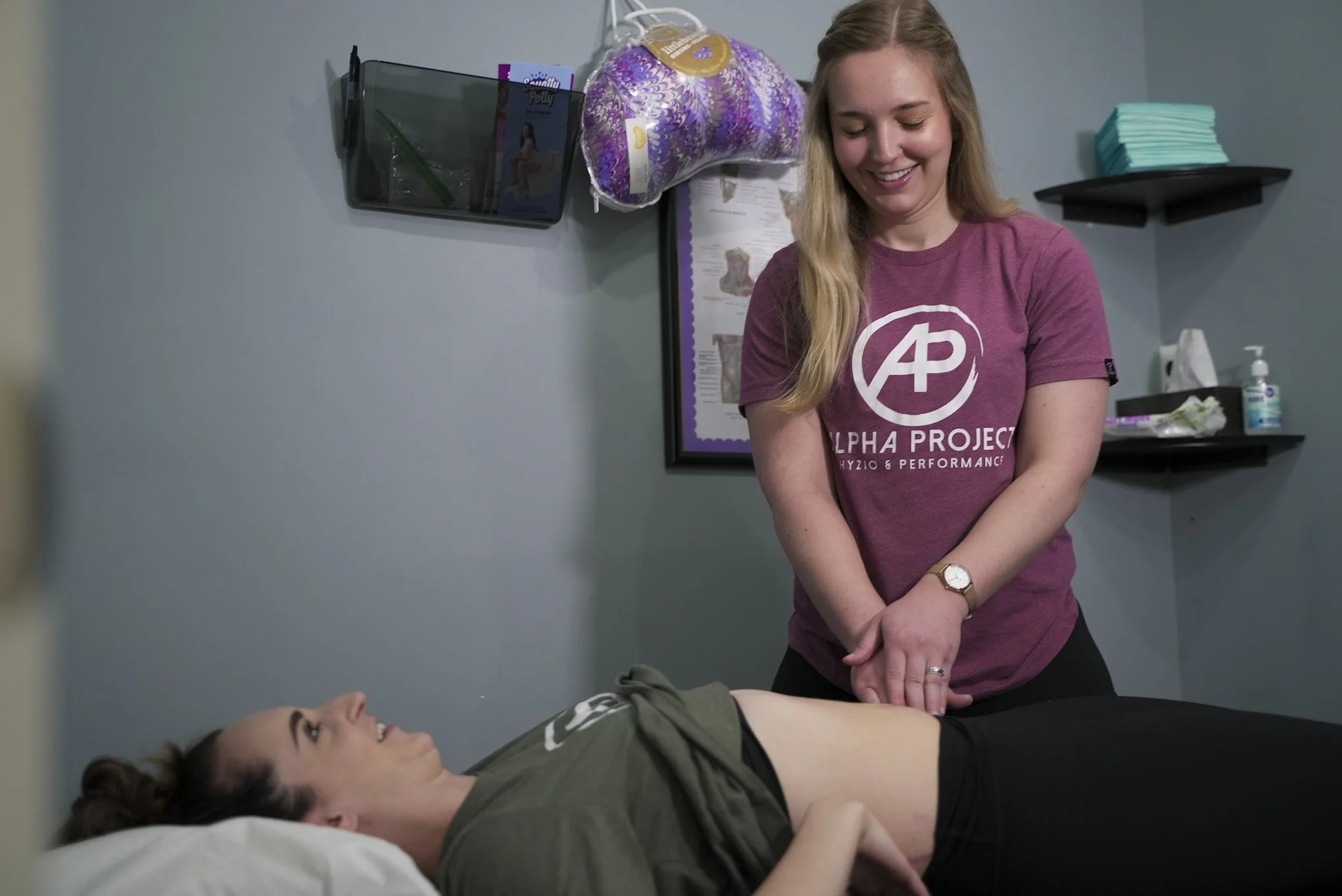
Your therapist begins with a thorough assessment of your posture, breathing, and abdominal wall. We don’t just check for the gap—we look at tension, coordination, and how your core functions during real-life movements.
Treatment often includes:
Breathwork and diaphragmatic control to engage the transverse abdominis and pelvic floor
Targeted core activation exercises that build strength without stressing the linea alba
Progressive functional movement retraining, such as squatting, lifting, or carrying, done with safe mechanics
One of the biggest mistakes postpartum clients make is jumping into traditional ab workouts—like crunches or planks—too soon. These movements can actually worsen the separation if done without proper control. Physical therapy provides a structured path back to strength, helping you avoid setbacks and feel confident in your body again.
Healing with Expert Support at Alpha Project
Healing from diastasis recti isn’t about getting a “flat stomach”—it’s about regaining control, strength, and confidence in your core. At Alpha Project, we offer 1:1 personalized care designed specifically for postpartum recovery.
Our sessions focus on:
Education, so you understand what’s happening and why
Body awareness, helping you feel connected to your movements
Progressive training, tailored to your goals—whether that’s playing with your kids, returning to the gym, or simply feeling stronger day to day
You don’t have to guess your way through recovery. With the right support, you can close the gap, rebuild your strength, and move forward with confidence.
